
Plumbers insurance
Cover for sole trader plumbers, heating engineers and plumbing firms. Including public liability, tools, employers' liability and commercial vehicle.
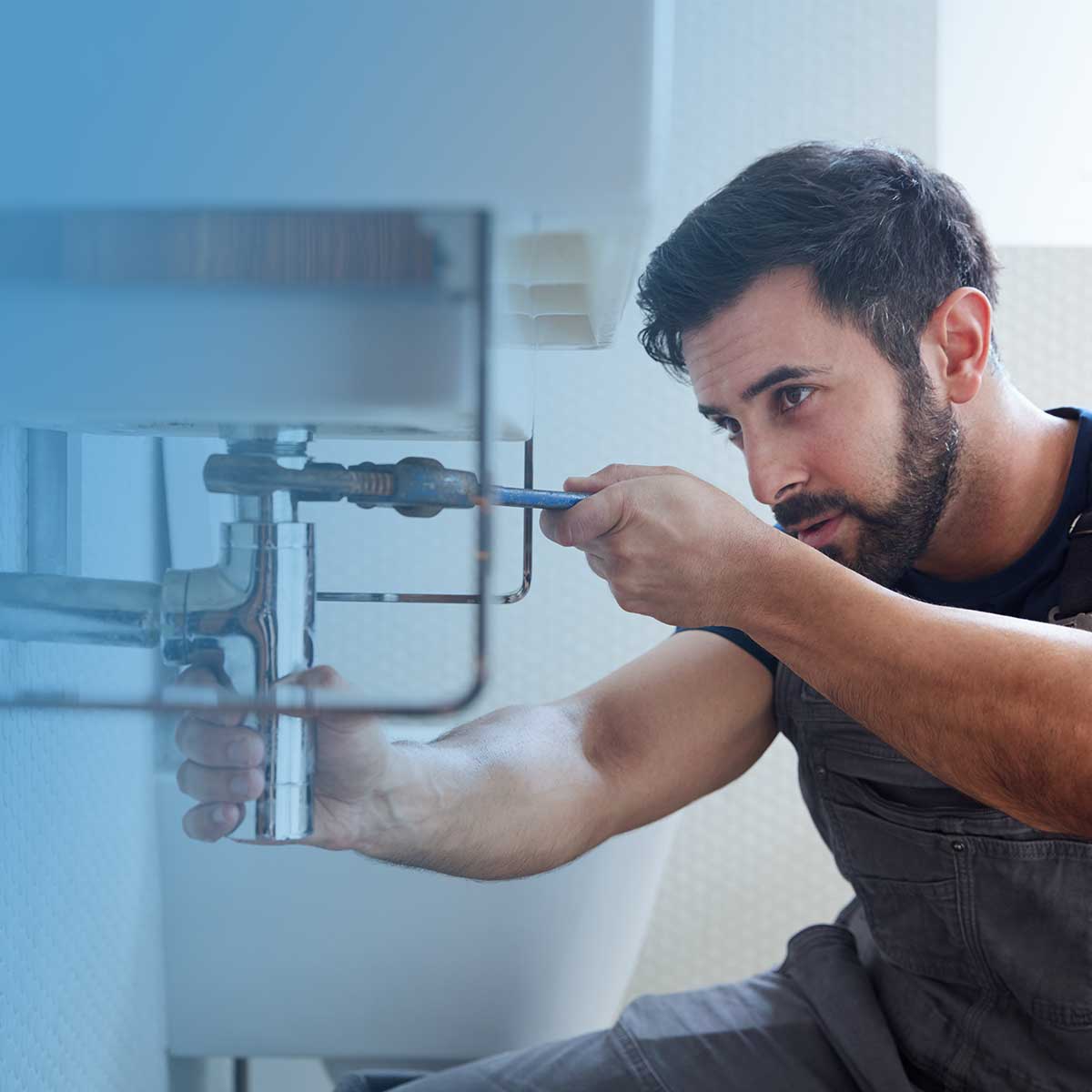
Plumbers insurance is a package of trade covers built around the risks of installing, repairing and maintaining water and heating systems. A typical policy combines public liability, tools and equipment, employers' liability (if you have staff), commercial vehicle and personal accident, with optional covers for contract works, goods in transit, professional indemnity and legal expenses. The right combination depends on whether you trade as a sole trader, a small plumbing firm or a larger heating contractor, and whether you carry out gas work.
PIB Insurance Brokers arranges plumbers insurance for sole traders, partnerships and limited companies, working with a panel of A-rated insurers who underwrite trades risk.
What plumbers insurance covers
Plumber policies typically combine a core of essential covers with optional extensions, depending on whether you trade as a sole trader, run a plumbing firm, or carry out gas work. Cover types, limits and exclusions vary by insurer and policy wording. The summaries below are general; the policy schedule and wording determine what is and isn't covered in any given claim.
| Cover | What it covers | Common exclusions and limits |
|---|---|---|
| Public liability | Compensation claims from customers or third parties for injury or property damage caused by your plumbing work. Includes the classic plumber scenarios: water damage from a failed joint, flooding from a burst pipe, damage to a customer's flooring or possessions. Typical limits £1m, £2m, £5m or £10m. | The cost of redoing the faulty work itself is usually excluded (see defective workmanship below). Claims involving employees are covered separately under employers' liability. |
| Employers' liability | Claims from employees, apprentices and labour-only subcontractors injured or made ill at work. Legally required if you employ anyone, minimum £5m under the Employers' Liability (Compulsory Insurance) Act 1969. Most policies provide £10m. | Genuinely self-employed bona fide subcontractors with their own cover. The definition varies by policy and HMRC's IR35 rules don't determine insurance categorisation. |
| Tools and equipment | Cover for hand tools, power tools, testing equipment and pipe-bending machinery against theft, accidental damage and loss. Typical limits £2,000 to £10,000, with higher sums available. | Tools left in vehicles overnight (most policies require locked, attended vehicles or a locked secure compound). Items not declared on the schedule. Wear and tear. |
| Commercial vehicle | Vans, pickups and company cars covered for third-party liability, accidental damage, fire and theft. Cover can include goods in transit, tools while in the vehicle, and signwriting or livery. | Standard motor exclusions apply. Tools cover within vehicle policies usually carries strict conditions on overnight storage. |
| Personal accident | Capital and weekly benefits if you're injured and unable to work. Sole traders find this particularly important because there's no sick pay to fall back on. | Pre-existing conditions, injuries from activities not declared on the schedule, intoxication. |
| Products liability | Claims arising from parts and components you've supplied or installed: boilers, valves, fittings, pipes. Covers the consequences of a product failure rather than the cost of the product itself. | Claims involving products you knew were defective or recalled. Loss of the product itself (not the consequential damage). |
| Contract works | The plumbing work in progress on a customer's site, including materials on site. Particularly relevant for larger installations, new builds and commercial heating contracts where significant work in progress is exposed. | Completed work (covered under defective workmanship sections of public liability). Theft of unsecured materials. |
| Goods in transit | Materials, parts and equipment being transported between your premises, suppliers and customer sites. | Items not adequately secured, vehicles left unlocked, goods left in transit beyond stated periods. |
| Professional indemnity | Claims arising from advice you've given on system design, sizing or specification. Relevant if you design heating systems, advise on energy efficiency, or specify equipment as part of your service. | Hands-on installation errors (covered under public liability instead). Disputes about contract price or scope. |
| Legal expenses | Solicitor fees and court costs for employment disputes, contract disputes, debt recovery and certain tax investigations. | Disputes that existed before the policy started, claims below the policy excess, defending criminal proceedings. |
What plumbers insurance does not cover
It's as important to understand what falls outside cover as what falls inside. Typical limitations across plumber policies:
- The cost of redoing the faulty work itself. If a joint you've fitted fails and floods a customer's kitchen, public liability covers the damage to the kitchen but not the cost of re-doing the joint. This is the defective workmanship exclusion and it's industry-standard. Specific defective workmanship extensions are available if you want to bridge the gap.
- Work outside your declared scope. If you do gas work but only declared general plumbing, gas-related claims may not be covered. Be specific when declaring activities. Carrying out gas work without Gas Safe registration will void cover.
- Tools left in vehicles overnight. Most policies require tools to be removed from vehicles overnight, stored in locked secure premises, or kept in vehicles parked in a locked compound. Tools stolen from vans parked on the street overnight are commonly excluded.
- Wear and tear. Damage from gradual deterioration of tools, vehicles or installed systems is not insurable damage.
- Sub-contractors without their own cover. If you use other tradespeople, they need their own employers' liability or be covered as labour-only subcontractors under yours. Bona fide subcontractors with their own cover are usually excluded from your employers' liability.
- Pre-existing damage and disputes. Issues that existed before the policy started, including ongoing disputes with customers, are not covered.
- Excess on every claim. All policies carry an excess (the amount you pay before the insurer contributes), which varies by cover. Plumber policies typically carry higher excesses for water damage claims given the frequency.
Claims may also be reduced or declined if policy conditions aren't met. Common examples: not using isolation procedures before working on pressurised systems, working outside declared hours, employing staff without notifying the insurer.
Why work with PIB Insurance Brokers
- Access to insurers who underwrite plumbing and trades risk, including those who handle gas work and larger heating contracts.
- Cover scaled to your business, from sole trader plumbers to plumbing and heating firms with multiple vans and employees.
- Clear advice on what cover plumbers actually need versus what's optional, so you're not paying for cover you don't use or going without cover you should have.
- Claims support for plumber-specific incidents: water damage to customer property, tool theft from vans, vehicle damage and employee injury claims.
- Risk management guidance for the trade, including isolation procedures, hot work, lone working and tool security.
- Local branches and dedicated account managers who can review your cover at renewal as your business changes.
What our clients say
Recent reviews from PIB Insurance Brokers clients across the sectors we work with, collected by Reviews.io.
New to the trade, switching, or not sure you're covered properly?
Get a quoteFrequently asked questions
Do sole trader plumbers need insurance?
Public liability isn't legally required for sole traders, but most customers, letting agents and building contractors will require proof of cover before letting you on site, and many domestic customers expect it too. Employers' liability is only legally required if you employ anyone. Personal accident cover is widely taken by sole traders because there's no sick pay if you're injured and unable to work.
If I do gas work, do I need different insurance?
You need to declare gas work on your policy and be Gas Safe registered. Most plumber policies cover gas work without a separate policy, but the activity must be on the schedule and rated accordingly. Carrying out gas work without Gas Safe registration will void cover and is a criminal offence under the Gas Safety (Installation and Use) Regulations 1998.
Does plumbers insurance cover the work I've done if it leaks later?
Public liability covers the consequential damage caused by faulty work, such as water damage to a customer's flooring or possessions. It does not usually cover the cost of redoing the faulty work itself. This is the defective workmanship exclusion. Specific defective workmanship extensions are available if you want to bridge that gap.
Can I leave my tools in my van overnight?
Most policies require tools to be removed from vehicles overnight, stored in locked secure premises, or kept in vehicles parked in a locked compound. Tools stolen from vans parked on the street overnight are commonly excluded. Some insurers offer cover for tools in attended or alarmed vehicles, but conditions vary. Check the security conditions on your specific policy.
Do I need professional indemnity insurance as a plumber?
Most hands-on plumbing work is covered under public liability rather than professional indemnity. Professional indemnity becomes relevant if you give advice on system design, energy efficiency, specifications or compliance, where the claim is about the advice rather than the installation. Specialist heating engineers and consultants are more likely to need it than general plumbers.
How quickly can I get a quote?
PIB Insurance Brokers can usually provide indicative terms within 24 to 48 working hours once we have your trading history, employee numbers, the types of work you do (including any gas or heating work), vehicle details and claims history. Sole trader quotes are typically faster than larger firms.